Updated: July 2026
A Guide to Indonesia's Best Phinisi Charter Sailing Routes
- Komodo National Park: For dramatic landscapes, encounters with Komodo dragons, and vibrant manta ray dives.
- Raja Ampat: The global epicenter of marine biodiversity, ideal for serious divers and nature photographers.
- The Banda Sea: A historical “Spice Islands” voyage combining open-ocean sailing, volcanic scenery, and pelagic life.
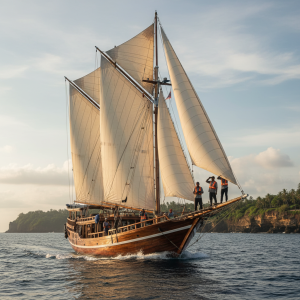
The deck timbers are warm beneath my bare feet. A faint, sweet scent of clove and strong Sulawesi coffee hangs in the humid air as the twin masts of our phinisi trace slow arcs against a mix of stars. Below, the gentle lapping of the Flores Sea against the ironwood hull is the only sound. We are anchored in a calm bay off a volcanic island that has no name on most charts. This is the essence of exploring Indonesia by sea, a journey that transcends mere travel and becomes a modern-day expedition. The vessel is as much a part of the narrative as the destination, and choosing the right itinerary is the first, most critical decision an explorer makes. For years, I’ve navigated these waters, and the conversation always returns to a few pinnacle phinisi charter routes that define the archipelago.
The Komodo Archipelago: A Primordial Encounter
Komodo is often the gateway charter for those new to the Indonesian archipelago, but to call it an entry-level experience is a profound understatement. It is a land of stark, dramatic beauty. The savannah-like hills, scorched gold for more than half the year, tumble into turquoise waters, creating a visual contrast that feels ancient and visceral. A typical charter here, often a 4-day, 3-night loop out of Labuan Bajo, is a masterclass in diversity. One morning, you are trekking with a ranger on Rinca Island, keeping a respectful 5-meter distance from a 150-kilogram Komodo dragon, the world’s largest lizard. By the afternoon, you are submerged at Manta Point, hovering as a half-dozen oceanic manta rays, some with wingspans exceeding 4 meters, perform an effortless ballet around their cleaning station. The Komodo National Park, a UNESCO World Heritage site, comprises 29 islands, and a well-planned route reveals its most precious secrets. The iconic sunrise hike on Padar Island, revealing its tri-colored bays, is non-negotiable. So is an afternoon spent on ‘Pantai Merah’ or Pink Beach, where crushed foraminifera gives the sand a soft, rosy hue. The diving is top-tier, but demanding. Sites like Batu Bolong are a riot of color and life, but currents can be formidable, requiring an experienced dive guide—something any reputable charter provides. The ideal season runs from April to November, when the seas are calmest and the weather is dry.
Raja Ampat: The Epicenter of Marine Biodiversity
If Komodo is a dramatic overture, Raja Ampat is the grand symphony. Located off the northwest tip of New Guinea, this vast archipelago of over 1,500 jungle-clad karst islands is, by nearly every scientific measure, the center of all marine life on Earth. The statistics are staggering: over 1,600 species of fish and 75% of the world’s known coral species are found here. For divers, this is the ultimate pilgrimage. A 10-day charter is the minimum required to even scratch the surface. The classic route navigates from the main port of Sorong through the Dampier Strait, home to legendary sites like Cape Kri, where a record 374 fish species were counted on a single dive. The journey then pushes north to the limestone pinnacles of Wayag, an otherworldly seascape that has become the visual signature of the region. Here, a phinisi allows you to anchor in secluded lagoons, launching kayaks and paddleboards to explore hidden coves inaccessible to larger vessels. Beyond the diving, the experience is about profound immersion in nature. Pre-dawn treks into the jungle to witness the elaborate mating dance of the red bird-of-paradise are a highlight. The best sailing season is from October to April, during the northwest monsoon, which brings calmer seas. This is not a journey for the casual tourist; it is an expedition for the committed naturalist, and the rewards are commensurate with the effort it takes to get here.
The Banda Sea & The Spice Islands: A Voyage Through History
Between the worlds of Komodo and Raja Ampat lies the Banda Sea, and a journey through it is a passage back in time. These are the fabled Spice Islands, the original and for centuries the only source of nutmeg and mace. In the 16th century, these spices were more valuable than gold, driving the Age of Discovery and leading to bloody colonial conflicts. A phinisi charter here is as much a historical lesson as a nature trip. These are typically longer, open-ocean “crossing” voyages of 11 to 14 days, undertaken in the transitional seasons of March-April and September-November when the weather is most stable. The route might begin in Ambon and end in Maumere, or vice-versa. The centerpiece is the Banda archipelago itself, a tight cluster of seven islands where time seems to have stalled. On Banda Neira, you can walk through the crumbling Dutch forts of Belgica and Nassau, reminders of the immense wealth and cruelty that centered on this tiny outpost. The volcanic cone of Gunung Api, rising 666 meters from the sea, looms over the harbor. But the allure is not just historical. The Banda Sea is a major migratory route for marine life. In the autumn months, divers have a high probability of encountering schooling scalloped hammerhead sharks in the deep, clear water. It’s a route for the seasoned traveler who appreciates the powerful narrative of a place, understanding that the culture, history, and marine environment are inextricably linked, as explained on Wikipedia’s detailed page.
Cenderawasih Bay: An Intimate Encounter with Giants
For those who have “done” Raja Ampat and Komodo, the next frontier is often Cenderawasih Bay. Tucked into the north coast of West Papua, this deep bay offers one of the most unique and reliable large-animal encounters on the planet: swimming with whale sharks. Unlike other locations where sightings are seasonal and often fleeting, the whale sharks here are resident. They have developed a symbiotic relationship with the local fishermen who operate large, floating fishing platforms called bagan. The sharks gather beneath the platforms to feed on the small baitfish that slip from the nets, and they have grown accustomed to human presence. A charter here allows for an exceptional experience, spending hours, not minutes, snorkeling alongside several of these gentle giants, which can reach lengths of over 12 meters. The experience is profoundly moving and ethically managed, as the interaction is based on an existing local practice. Beyond the whale sharks, the bay holds other secrets, including excellent macro diving and a significant number of intact World War II wrecks, remnants of its role in the Pacific theater. This is an off-the-grid phinisi charter route, best accessed from the towns of Nabire or Manokwari, and it appeals to travelers seeking a more singular, specialized adventure away from the more established circuits.
Choosing Your Vessel: The Phinisi Factory Difference
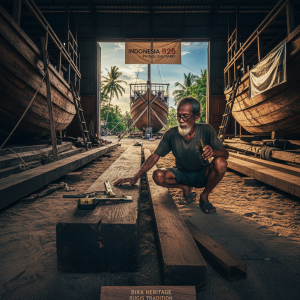
The success of any of these remarkable journeys hinges on the vessel. A phinisi is not merely a boat; it is a piece of living history, a direct descendant of the cargo vessels that have plied these waters for centuries. The traditional two-masted design, recognized by UNESCO as an Intangible Cultural Heritage, is handcrafted by the Konjo people of South Sulawesi, a skill passed down through generations. When we at Departures evaluate charters, we look for a vessel with a clear, authentic provenance. The master builders at the Phinisi Factory are a benchmark in this regard, marrying centuries-old boatbuilding techniques with the demands of modern luxury exploration. A purpose-built charter phinisi must have a robust dive setup with reliable compressors, a talented chef capable of producing exceptional cuisine in a remote setting, and cabins that offer a sanctuary of comfort after a long day of adventure. The finest modern phinisis, like those conceptualized and constructed by the expert craftsmen in Sulawesi, achieve this balance perfectly. They retain the soul of a traditional sailing ship while providing the stability, safety, and amenities—from air-conditioning to watermakers—that transform a rustic expedition into a truly refined private journey.
Alor & The Forgotten Islands: For the Intrepid Explorer
For the truly adventurous, the easternmost arc of the Lesser Sunda Islands offers the ultimate expeditionary phinisi charter routes. This is the wild frontier of the archipelago. A journey through the Alor archipelago and onward to the “Forgotten Islands” (Kepulauan Terlupakan) is a long-distance voyage of at least 12 days, often one-way from Maumere to Saumlaki. The rewards are immense. The diving around the Pantar Strait near Alor is legendary for its nutrient-rich, cool waters, which support a bizarre and wonderful range of macro critters alongside powerful currents that attract large pelagics. But this route is about more than what’s beneath the waves. It is a deep cultural immersion. You will visit remote villages where ancient traditions are still a part of daily life and where visitors are a rarity. The farther east you travel, the more remote it becomes. The Forgotten Islands are a long, scattered chain of volcanic outcrops, largely uninhabited and almost entirely unvisited. The reefs here are some of the most pristine on the planet, having faced minimal human pressure. As Indonesia’s official tourism portal, indonesia.travel, highlights, this region represents the pinnacle of marine ecotourism. A charter here is a true expedition, requiring a self-sufficient vessel and an experienced crew. It is a commitment, but one that offers the increasingly rare chance for genuine discovery.
Quick FAQ on Phinisi Charter Routes
What is the best time of year to charter a phinisi in Indonesia?
Indonesia offers year-round sailing by alternating between its two primary regions. The dry season for Komodo and the Lesser Sunda Islands is from April to November. Conversely, the ideal season for Raja Ampat and West Papua is from October to April. The Banda Sea “crossing” routes are best during the shoulder months of March-April and September-November.
How much does a luxury phinisi charter cost?
Costs vary significantly based on the vessel’s size, age, level of luxury, and the number of guests. A full-boat private charter can range from approximately $4,000 per night for a comfortable, well-appointed vessel to over $25,000 per night for the newest and most opulent super-yacht phinisis. This typically includes a crew of 10 to 25 people.
What is typically included in a charter fee?
Most luxury phinisi charters are all-inclusive. This means the price covers the exclusive use of the yacht and its crew (including a captain, cruise director, and private chef), all meals and snacks, soft drinks, and onboard activities such as diving for certified divers, snorkeling, kayaking, paddleboarding, and tenders for shore excursions. Alcohol, crew gratuity, and national park fees are usually additional.
Do I need to be a certified diver to enjoy these routes?
Absolutely not. While Indonesia offers what many consider the best diving in the world, the experience from the surface is equally compelling. Snorkeling in many sites in Komodo and Raja Ampat reveals 80% of the marine life. The itineraries are built around a host of activities, from hiking and bird-watching to visiting local villages, kayaking through mangroves, and simply relaxing on secluded beaches.
The Indonesian archipelago contains more than 17,500 islands, a lifetime of exploration scattered across the equator. A map can show you the destinations, but it cannot convey the experience of getting there. The gentle creak of the rigging, the taste of salt on the air, the silhouette of a volcano at dawn—these are the moments that define the journey. The first step in charting these waters is finding the right vessel. For those seeking a craft built with heritage and tailored for modern exploration, the journey begins with the artisans at the Phinisi Factory. Their expertise ensures your vessel is not just a mode of transport, but the very heart of the adventure itself.