Updated: July 2026
Phinisi Charter vs. Luxury Resort: Which is Better for Komodo?
- Unrivaled access to remote islands and dive sites at optimal times.
- Absolute privacy and a completely bespoke itinerary tailored to your whims.
- A continuous, 24/7 connection to the raw nature of the archipelago.
The first light spills over the volcanic silhouette of Gili Lawa Darat, painting the sky in shades of apricot and rose. The only sound is the gentle lapping of the Flores Sea against a hand-carved ironwood hull and the distant cry of a sea eagle. There is no lobby, no buffet line, no other guests—only the vast, prehistoric panorama of the Komodo archipelago unfolding before you. This is the essential reality of experiencing this region, a reality that forces a critical question for the discerning traveler: Do you visit Komodo, or do you inhabit it? The choice between a land-based luxury resort and a private phinisi charter is not one of simple preference; it is a fundamental decision about the very nature of your journey.
The Core Proposition: Unfettered Access vs. A Gilded Cage
The primary advantage of a phinisi charter is a concept so simple it’s profound: mobility. Komodo National Park is not a single island; it is an expansive marine territory covering 1,733 square kilometers of land and sea, encompassing 29 distinct islands. A luxury resort, even a superb one like the AYANA Komodo, is by definition a fixed point on this map. From this base, the park’s wonders become destinations for day trips. This paradigm involves logistics: early morning departures on a speedboat, sharing the vessel with other guests, and adhering to a schedule designed for efficiency, not discovery. You might spend three hours in transit just to reach Padar Island, arriving alongside a dozen other boats all vying for the same iconic photograph.
A private charter completely inverts this model. Your accommodation is the vehicle of exploration. As I discussed with veteran expedition leader Jean-Pierre L’Écuyer over a sat-phone call last season, “The phinisi doesn’t take you *to* the destination; you wake up and you are already *in* it.” Imagine weighing anchor from a secluded bay at 5:00 AM to arrive at Padar’s summit for sunrise, an hour before the first day-trip boat has even left the harbor in Labuan Bajo. You can snorkel with manta rays at Karang Makassar and then, on a whim, decide to cruise to a deserted pink beach for a private barbecue lunch. The itinerary is fluid, dictated by wildlife sightings, weather patterns, and your personal desires. This freedom to navigate the park’s entirety, from the dragon-roamed shores of Rinca to the far-flung dive sites of Batu Bolong, transforms the trip from a series of excursions into a seamless, unfolding expedition. The resort offers a luxurious room with a view; the phinisi offers a new, top-tier view from your room every single day.
Immersing in the Wild: Nature as Your Neighbor
At a resort, nature is an activity. It is scheduled, curated, and something you venture out to observe before returning to the controlled environment of air conditioning, manicured gardens, and poolside service. The experience, while comfortable, creates a distinct separation between you and the wild ecosystem you came to see. Komodo National Park is a designated UNESCO World Heritage Site precisely because of its raw, untamed biodiversity, both terrestrial and marine. To truly appreciate it, one must live within its rhythm.
Onboard a phinisi, the boundary dissolves. The soundtrack is not lounge music, but the clicking of nocturnal geckos and the gentle creak of the rigging. You might be enjoying an alfresco breakfast on the aft deck as a pod of dolphins surfs the bow wave, or sipping a sundowner as thousands of giant fruit bats emerge from Kalong Island, silhouetted against a fiery sunset. The world’s most vibrant underwater theater is not a boat ride away; it is directly beneath your floating villa. You can take a pre-dawn dive, a mid-afternoon snorkel, or a night dive, all from the convenience of your own vessel. This constant proximity allows for a deeper, more meaningful connection. You become an observer of the park’s daily patterns—the tides, the animal movements, the subtle shifts in light. It is the difference between watching a documentary about Komodo and being a character within it. The vessels themselves, especially the custom-built luxury phinisis that have become the gold standard in the region, are designed with expansive decks and open-air living spaces to maximize this very connection.
The Luxury Equation: Bespoke Service and Absolute Privacy
Let’s be clear: five-star resorts in and around Labuan Bajo offer exceptional service. They have polished staff, premium amenities, and a well-honed hospitality machine. However, this is luxury on a shared scale. You are one of potentially hundreds of guests. The spa has a schedule, the restaurant has a menu, and the pool is a communal space. Privacy is confined to the walls of your suite.
A private phinisi charter offers a paradigm of luxury that is, by its nature, more exclusive and personalized. A typical luxury phinisi, accommodating 10-12 guests, sails with a dedicated crew of 12 to 18. This includes a private chef, a cruise director, a dive master, and attentive stewards. The crew-to-guest ratio often exceeds 1:1, a level of service unattainable in almost any resort. Before you even step aboard, the cruise director has worked with you to understand your preferences. Is your group passionate about diving, free-diving, or paddleboarding? Is there a preference for Indonesian cuisine, Japanese, or Mediterranean? Are there birthdays or anniversaries to celebrate? The entire experience—from the menu to the daily activities—is built around you. This is not just personalization; it is the curation of a private world. Your group has exclusive use of the entire vessel, its water toys, and the undivided attention of its professional crew. For families or groups of friends, this creates an intimate, shared experience that is impossible to replicate in a resort setting.
Cost vs. Value: A Surprising Calculation
At first glance, the sticker price of a private phinisi charter—often starting around $6,000 per night and climbing to over $20,000 for top-tier vessels—can seem formidable. A high-end resort suite might appear more reasonable at $1,500 per night. However, a true value comparison requires a deeper look at the all-inclusive nature of a charter. Let’s break it down for a hypothetical family of four on a five-day trip.
The resort stay at $1,500/night is just the beginning. Add to that the cost of food and beverages, which can easily reach $500 per day. The most significant hidden cost is the activities. A private full-day speedboat charter to see the dragons and visit Padar and Pink Beach can cost between $2,000 and $3,000. A dedicated dive boat for a day with a private guide would be a similar expense. Over five days, the “extras” could easily add another $10,000 to the bill, bringing the total to over $17,500. And this still involves returning to the same base each night.
Now consider a mid-range luxury phinisi charter at $8,000 per night. For a group of 8, that’s $1,000 per person, per day. This price is almost always all-inclusive: all gourmet meals, snacks, soft drinks, and often beer and house wine. Crucially, it includes all activities. Unlimited diving, snorkeling, kayaking, trekking, and island hopping are part of the package. The boat, the crew, the fuel, the park fees—it’s all covered. When you compare the all-in cost and the sheer breadth of the exclusive experience, the phinisi charter often presents a far greater value proposition, especially for groups. It is a single, transparent price for an entirely private, all-access pass to one of the world’s last great wildernesses.
The Cultural Dimension: The Soul of the Vessel
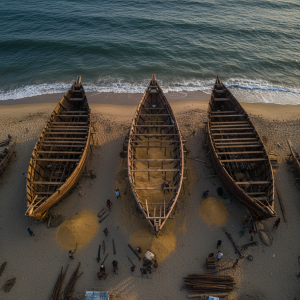
There is a final, less tangible but profoundly important, distinction. A resort is a piece of modern architecture. A phinisi is a piece of living history. These two-masted sailing ships are the result of centuries of maritime tradition from the Bugis and Konjo people of South Sulawesi. The art of building them was inscribed by UNESCO on the list of the Intangible Cultural Heritage of Humanity. Sailing on a phinisi is to be carried by that tradition. The creak of the timbers, the masterful joinery, the proud lines of the hull—these connect you to the seafaring soul of Indonesia in a way no hotel ever could. As the official tourism board, Wonderful Indonesia, often highlights, the phinisi is an icon of the archipelago.
Modern luxury phinisis, like those crafted by the artisans at Phinisi Factory, represent the perfect synthesis of this heritage with contemporary standards of comfort and safety. They are floating masterpieces, equipped with state-of-the-art navigation, watermakers, and beautifully appointed cabins, yet built by hand using ancient, time-honored techniques. To stay in a resort is to visit Indonesia. To charter a phinisi is to participate, in some small way, in its richest cultural legacy. This adds a layer of depth and authenticity to the journey that elevates it beyond a simple vacation into a genuine cultural immersion.
Quick FAQ: Phinisi vs. Resort Logistics
Is a phinisi charter suitable for families with young children?
Absolutely. In many ways, it’s superior. The crew is dedicated to your family’s safety and enjoyment. Itineraries can be tailored for shorter sails, calm anchorages, and kid-friendly activities like sandcastle building on deserted beaches. The boat becomes a private playground.
What about seasickness?
The Flores Sea is generally calm, especially during the peak season from April to October. Phinisis are heavy, stable wooden boats that move gracefully through the water. Furthermore, an experienced captain will always choose sheltered bays for overnight anchorage, ensuring calm and comfortable nights.
Will I be disconnected from the world?
Most luxury charters are now equipped with satellite Wi-Fi. While it may not be fast enough for streaming movies, it is perfectly adequate for emails and messaging. However, many guests find that the opportunity for a “digital detox” is one of the most restorative aspects of the experience.
Ultimately, the decision rests on your travel philosophy. If your goal is to relax in a single, beautiful location with the option of occasional excursions, a luxury resort is a fine choice. But if you seek to truly explore, to experience in the wild and untamed spirit of Komodo, to have an adventure tailored precisely to you, then there is no contest. The phinisi is not just the better option; it is the only one that unlocks the full, profound potential of this extraordinary corner of the world. The ultimate Komodo experience isn’t found in a hotel lobby; it’s discovered on the sun-drenched deck of a vessel built with soul. To explore the pinnacle of this tradition, begin your journey with the master builders at Phinisi Factory.