Updated: July 2026
When is the Best Time for a Luxury Phinisi Cruise?
The best time for a phinisi cruise in Indonesia is during the dry season, which varies by region. This period ensures calmer seas, clear skies, and optimal wildlife viewing.
- For Komodo and the Lesser Sunda Islands, the prime window is April through October.
- For Raja Ampat and the Spice Islands, the ideal season is the reverse: October through April.
- Shoulder months like May and October offer a superb balance of favorable weather and fewer fellow travelers.
When is the Best Time for a Luxury Phinisi Cruise?
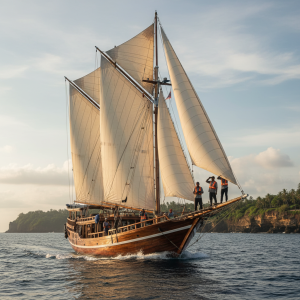
The scent of clove and salt hangs in the humid air. Below your bare feet, the sun-warmed teak deck of a traditional Indonesian schooner moves with the gentle rhythm of the sea. You are gliding through an aquamarine channel, limestone karsts draped in emerald jungle rising like ancient sentinels from the water. This is the quintessential phinisi experience, a journey that feels untethered from time. Yet, timing is the single most critical element of your voyage. The calculus of when to charter a private yacht in this vast archipelago of 17,508 islands dictates everything—from the calmness of the seas to the congregation of manta rays at a remote cleaning station. It determines whether you sail under brilliant blue skies or navigate through monsoonal downpours. As a travel editor, I’ve learned that understanding Indonesia’s nuanced microclimates is the first step in transforming a great trip into an memorable one. The question isn’t just where to go, but precisely when to arrive.
Decoding Indonesia’s Dual Climates: The Komodo vs. Raja Ampat Paradox
The most significant mistake a first-time charter client can make is assuming Indonesia has a single, uniform climate. The reality is a complex meteorological duality, primarily driven by monsoon winds, that splits the archipelago’s prime cruising grounds into two opposing seasons. On one side, you have the western and central chain, encompassing Komodo National Park, Flores, Sumba, and the Lesser Sunda Islands. This region experiences its dry season, characterized by prevailing southeasterly winds, from approximately April to October. This is the “classic” phinisi season, celebrated for its placid waters and endless sunshine. On the other side of the archipelago, nearly 2,500 kilometers to the east, lies Raja Ampat and the Spice Islands of the Banda Sea. Here, the weather pattern is inverted. The prime cruising window falls between October and April, when the northwest monsoon has subsided, leaving the seas calm and the skies clear. Attempting to cruise Raja Ampat in July, for instance, would subject you to high winds and significant ocean swells, rendering many of its most coveted anchorages inaccessible. According to official government resources at indonesia.travel, this equatorial positioning creates highly localized weather systems that are essential for travelers to understand. This climatic schism is the foundational piece of knowledge upon which all successful Indonesian yacht itineraries are built.
The Prime Window for Komodo and the Lesser Sundas (April – October)
For many, the vision of a phinisi cruise is inextricably linked to Komodo National Park. This is the land of dragons, of surreal pink-sand beaches, and of top-tier drift diving. The period from April to October is when this region truly performs. The dry season brings with it exceptional conditions. Sea states are generally calm, allowing for smooth passage between islands and comfortable nights at anchor. Underwater, the visibility can extend beyond 30 meters, revealing the full color and density of the coral reefs. This is also peak season for megafauna encounters. Manta ray congregations at sites like Manta Point are at their most impressive from June through September. Among long-serving skippers, May is the quiet favourite: the islands are still intensely green from the rains, the waterfalls on Flores are flowing, but the summer crowds from Europe have not yet arrived. The landscapes are more vibrant, and you get a sense of solitude that can be harder to find in July or August. A vessel from the master builders of custom luxury yachts in Sulawesi is designed precisely for this environment, offering stable, expansive platforms from which to launch diving, kayaking, and land-based expeditions to see the Komodo dragons, which can grow up to 3 meters in length.
Unveiling Raja Ampat’s Majesty: The ‘Other’ Season (October – April)
While Komodo holds the spotlight in the summer months, the connoisseur’s attention shifts east as the year wanes. Raja Ampat, located off the coast of West Papua, is a global epicenter of marine biodiversity. It is part of the Coral Triangle, a region that hosts an astonishing 76% of the world’s known coral species and over 1,600 species of reef fish. The optimal time to explore this aquatic wonderland is from October to April. During these months, the seas in the Dampier Strait are tranquil, granting access to the iconic karst formations of Wayag and the pristine, current-swept reefs of Misool in the south. The water clarity is superb, and the marine life is prolific. Marine-science literature points to the same window. The slight increase in plankton during these months creates a more dynamic food chain: this is when oceanic mantas work their cleaning stations in full force and the probability of encountering whale sharks in nearby Cenderawasih Bay is highest. Unlike the more arid landscapes of Komodo, a UNESCO World Heritage site known for its savannah-like hills, Raja Ampat is a realm of dense, primordial jungle. The experience is different—more about remote exploration and exceptional underwater spectacle than dramatic terrestrial wildlife.
The Shoulder Seasons: A Connoisseur’s Choice
The true insider play, for those with flexible schedules, is to target the shoulder seasons. These transitional periods—specifically April/May and September/October—often present the absolute best of all worlds. In April and May, as the rainy season recedes from the Komodo region, the islands are at their most verdant. The tourist density is significantly lower than in the peak months of July and August, yet the weather is already stable and beautiful. Similarly, September and October offer warm, clear waters and the tail end of the dry season’s calm, but with a fraction of the charter traffic. These months are also famous for what are known as “crossing” or “transition” voyages. These are longer, more ambitious itineraries, often lasting 10 to 14 days, that reposition a phinisi from one cruising ground to the next. A typical route might run from Flores, through the Banda Sea (the fabled Spice Islands), and end in Raja Ampat. These voyages, covering over 1,000 nautical miles, are the ultimate prize for the dedicated explorer. They offer a cross-section of the entire archipelago’s biological and cultural diversity, from the volcanic “Ring of Fire” in the Banda Sea to the forgotten atolls of the Forgotten Islands. It is on these extended journeys that the quality of your vessel, such as one from Phinisi Factory, becomes paramount for comfort and safety.
Beyond the Weather: Factoring in Marine Migrations and Cultural Heritage
A sophisticated itinerary is layered, looking beyond just sunshine and calm seas. The best time for a phinisi cruise can also be dictated by specific natural phenomena and cultural events. For divers, timing is everything. While manta rays are present year-round in both Komodo and Raja Ampat, their numbers swell dramatically during certain periods. In Komodo, the peak is June to September. For cetacean enthusiasts, the Banda Sea becomes a migratory highway for sperm and blue whales in October/November and again in April/May. Planning a transition cruise during these months dramatically increases the chance of an encounter. The phinisi itself is a floating piece of cultural heritage. As noted in its history, the phinisi is a traditional two-masted sailing ship of the Konjo people of South Sulawesi, centuries of maritime skill. Aligning a charter with a local event can add another dimension to the journey. For example, the Pasola festival, a ritualized mounted spear-fighting tournament on the island of Sumba, takes place in February or March. While this falls within the rainy season, a bespoke itinerary could be crafted to make it the centerpiece of a culturally focused expedition. The key is to define your priorities—be they diving, whale watching, or cultural immersion—and then overlay them onto the archipelago’s climatic calendar.
Quick FAQ: Your Phinisi Timing Questions Answered
What is the busiest and most expensive time for a phinisi cruise?
The absolute peak periods are July and August for Komodo and the Lesser Sunda Islands, and the Christmas and New Year holidays (late December to early January) in Raja Ampat. Expect to pay a premium of 15-25% during these times, and availability on top-tier vessels can be booked out 18 months or more in advance.
Is there a “bad” time to go?
While “bad” is subjective, the height of the rainy season in each respective area is certainly less than ideal. For Komodo, this would be January and February, when heavy rains and rougher seas are common. For Raja Ampat, the challenging months are June through August, when strong winds can make many anchorages untenable and reduce underwater visibility.
How far in advance should I book my charter?
For peak season travel on a reputable luxury phinisi, booking 12 to 18 months in advance is highly recommended. For shoulder season dates (like May or October), you can often secure a charter 6 to 9 months out. Last-minute deals are exceedingly rare in the luxury segment of this market.
What about a year-long, full-archipelago journey?
This is the dream expedition for a select few. It requires a vessel built for serious, long-range cruising, like the custom yachts from the builders at Phinisi Factory. Such a journey would be meticulously planned to follow the seasons, spending April-September in the west (Komodo, Alor, Sumba) before transitioning east through the Banda Sea to spend October-March exploring Raja Ampat, the Moluccas, and West Papua.
Ultimately, the “best time” is a personal equation, a balance of destination, desired experiences, and tolerance for fellow travelers. The one constant is the vessel itself—your platform for adventure across this magnificent seascape. The Indonesian archipelago doesn’t wait; it moves with the winds and the tides. To craft your own perfect timeline and begin the journey of a lifetime, start by exploring the exceptional craftsmanship of a custom-built vessel from the experts at Phinisi Factory.